Poop & dog food?
The digestion and utilization of nutrients is a complex process that is influenced by many factors.The fact that an animal excretes more feces does not necessarily indicate that it is not utilizing the nutrients in its feed.
General well-being, weight, energy and other factors should also be taken into account.
It's important to note that individual differences can occur between animals. Some animals may be more sensitive to dietary changes than others. However, this usually resolves after a period of adjustment.
Change in feed composition:When pet owners change their pet's food or try a new brand, this can temporarily lead to a change in stool volume. The pet's intestinal tract must adapt to the new nutrients and ingredients, which can lead to temporary changes.
Digestion of fiber:The amount of fiber in the diet can affect the amount of feces produced. High-fiber foods can cause animals to excrete more feces. However, this does not necessarily mean that the food will be poorly tolerated.
Adjustment time:Animals often need time to adjust to a new diet. During this adjustment period, stool output may temporarily increase. The digestive system needs to adjust to the new nutrients.
Feeding amount:If pet owners increase the amount of food to ensure their animals receive sufficient nutrients, this can also lead to a higher stool volume. A larger amount of food logically leads to more excretions.
Production of the feed:The degree of grinding of the ingredients in a feed also plays a role. The lower the degree of grinding, the better the digestibility and nutrient breakdown of the feed. In this case, the improved digestibility can lead to higher or better digestibility of the feed and, for a short time, softer stools and increased stool production. If the animal also gets more exercise, the feed passes through the digestive tract more quickly.
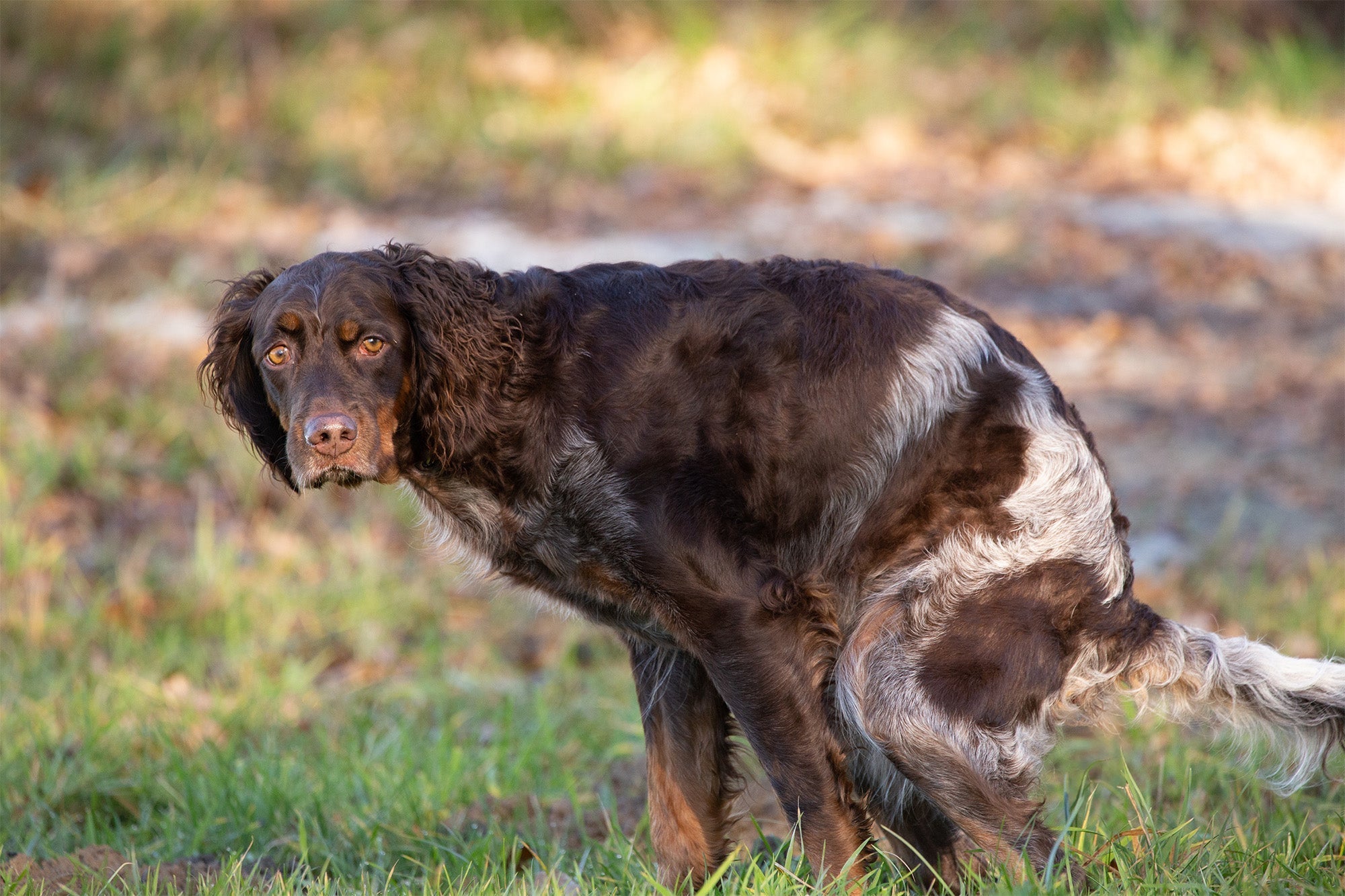
The amount of stool produced often depends on the amount of indigestible components in the diet, such as fiber. High-fiber foods can lead to increased stool volume because they are generally less digestible.
An appropriately bulky stool volume is crucial for the health of your dog's anal glands. Adequate stool volume helps maintain natural pressure on the anal glands, thus helping to prevent blockages and potential discomfort.
However, this doesn't mean that the food isn't being digested well. It's normal for a certain amount of food to be excreted undigested.
There is scientific evidence that suggests that increased stool production is not necessarily related to the digestibility of the feed or its quality.An animal's stool output can be influenced by many factors, including the feed composition, the amount of fiber, feeding habits and the individual digestive capacity of the animal, as well as the animal's active movement.
Austria
Grazer Straße 9
8434 Neutillmitsch
Germany
Karlsplatz 3
80335 Munich
Endlich kein Durchfall mehr u ein gesunder Magen/Darm.
Über 2.5 Jahre hinweg haben wir inklusive einer Ausschlussdiät u etlichen Konsultationen beim Tierarzt u natürlich Notfällen am Wochenende u Feiertagen, alles versucht.
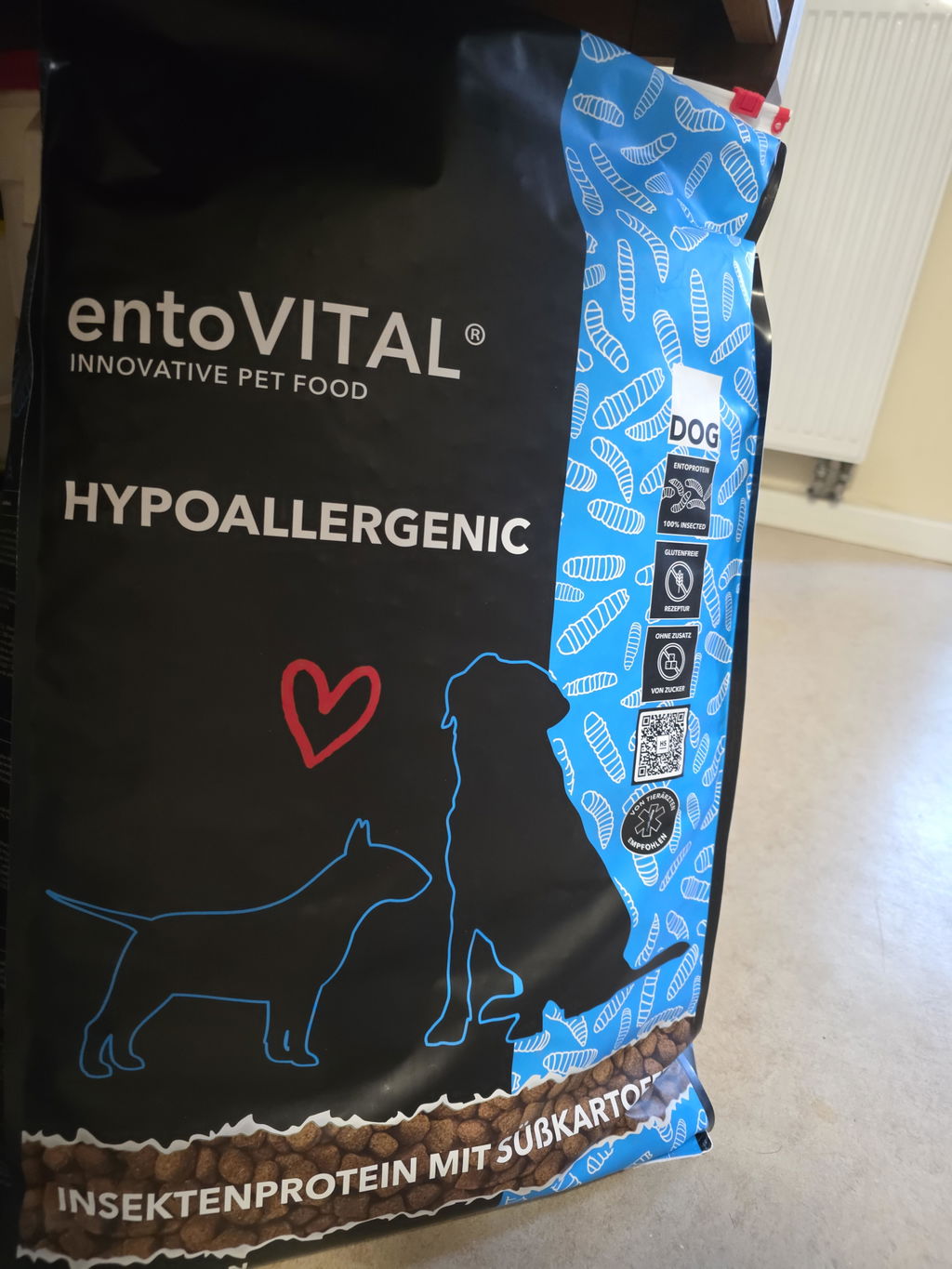
Seit wir das Hypoallergenic von entoVITAL geben ist endlich alles gut. Mein Hündin ist eine sehr mäkelige Esserin, Trockenfutter hatte sie bisher grundsätzlich abgelehnt u ich hatte die Befürchtung, dass sie das Insektenfutter nicht annimmt. Das Gegenteil war der Fall. Wie konnte nicht mal eine sanfte Futterumstellung machen, da sie das alte Futter nicht mehr angerührt hat u sich nur noch auf das entoVITAL gestützt hat.
Iht „Output“ normalisierte sich sofort, keine Magengeräusche mehr, kein Schmatzen u kein Grasfressen mehr.
Ich hatte auch alles an Prä/Probiotika u alle Zusatzprodukte gegen „Grasfressen“ ausprobiert.
Ohne Erfolg.
Endlich fühlt sich meine Keine rundherum wohl u somit kann auch ich wieder ein Leben ohne ständige Sorge um meinen Hund führen.